Best Freediving Spots in the Philippines: A Local Guide
The Philippines is made up of more than 7,000 islands, warm tropical waters, and some of the richest marine biodiversity in the world. For many divers, it is not just a destination but a place where freediving feels instinctive and alive. Whether you are just starting or training for depth, freediving in Philippines offers diversity, accessibility, and year round conditions that few countries can match.
From reef walls in Panglao, Bohol to historic wrecks in Coron, every region offers a different underwater experience. As locals, we know that choosing the right spot can shape your entire journey. This guide will help you understand where to dive, what to expect, and which locations best match your skill level.
Why the Philippines Is One of the Best Countries for Freediving
Freediving in Philippines stands out because of its warm water, strong visibility, and thriving marine ecosystems. Water temperatures usually range between 26 to 30 degrees Celsius, making long training sessions comfortable. Visibility often reaches 20 to 30 meters in many areas.
The country sits within the Coral Triangle, meaning reef life is abundant and diverse. Turtles, reef sharks, sardines, and colorful coral gardens are common sights. In many islands, depth is accessible close to shore, creating ideal conditions for both beginners and advanced freedivers.
Freediving in Panglao, Bohol
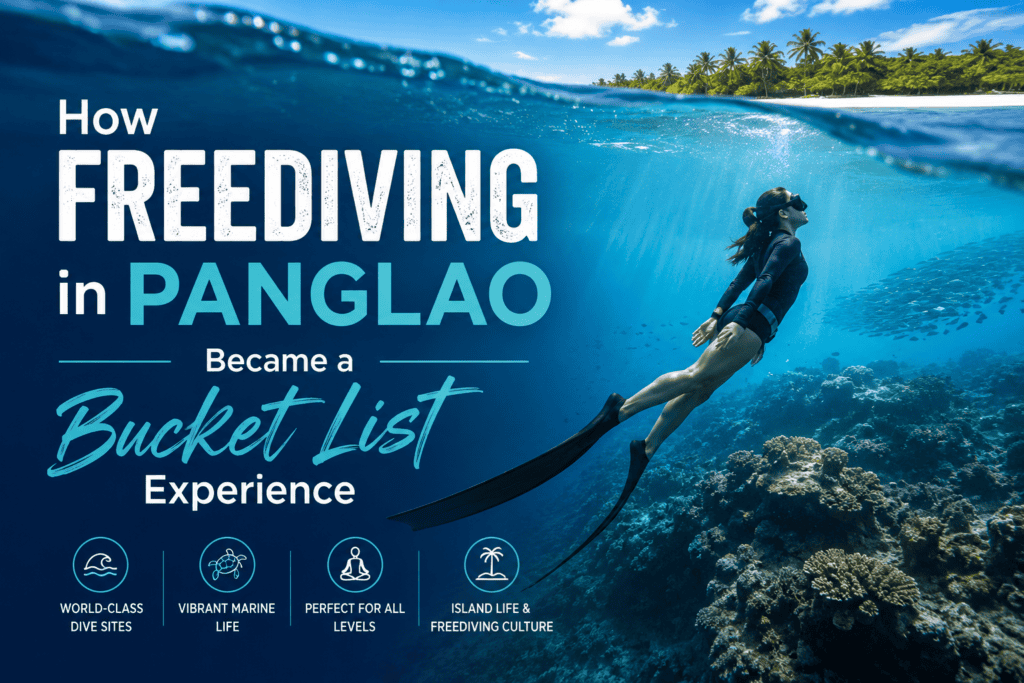
Panglao in Bohol is one of the most well known hubs for freediving in Philippines. Calm seas, accessible reef walls, and established training centers make it one of the most beginner friendly and versatile locations in the country.
Napaling Reef Wall (Panglao)
Napaling Reef features a dramatic wall that drops from shallow coral gardens into deeper blue water. Depth is accessible just a short swim from shore, making it ideal for line training and skill development. The famous sardine schools add a breathtaking element to every dive, and visibility is consistently good throughout most of the year.
Balicasag Island
A short boat ride from Panglao, Balicasag Island offers healthy coral reefs, frequent turtle sightings, and deeper walls suitable for training. The site provides a balance between marine life encounters and structured depth sessions. Currents can vary, which makes local guidance important for safety and timing.
Plane wreck
One of the more unique sites near Panglao, Bohol is the Plane Wreck. Resting at recreational depth, this small aircraft wreck has gradually become an artificial reef. It offers freedivers a different type of exploration compared to reef walls, combining structure, marine life, and open water photography opportunities. The wreck is accessible for intermediate divers and is best explored during calm conditions with strong visibility.
Who Panglao, Bohol Is Best For
Panglao, Bohol is ideal for:
Beginners taking their first freediving certification
Intermediate divers refining technique and comfort at depth
Divers interested in wreck exploration
Its accessibility, consistent conditions, and variety of dive sites make it one of the strongest all around destinations for freediving in the Philippines.
Freediving in Apo Island
Apo Island is best suited for beginners to intermediate divers who are confident in open water settings. Boat access is required, and weather conditions should always be considered. Diving with local operators ensures safe entry points and reliable surface support.
Coron in Palawan offers a completely different experience. Known for its World War II shipwrecks, Coron attracts freedivers interested in exploration and depth.
Reef vs Wreck Freediving
Coron allows divers to choose between reef sites and historic wrecks. Reef areas feature limestone formations and coral systems, while wreck freediving offers the chance to explore submerged ships in clear tropical water. Depth ranges vary, making it suitable for different experience levels.
Water Conditions and Accessibility
Water conditions in Coron are generally calm with good visibility. However, most dive sites require boat access. Some wrecks sit at significant depth, which makes proper training and safety supervision essential.
Who Coron Is Best For:
Coron is ideal for:
Intermediate freedivers seeking variety
Advanced divers training for greater depth
Divers interested in wreck exploration
It is less beginner oriented compared to Panglao, Bohol but extremely rewarding for trained freedivers.
How to Choose the Right Freediving Spot for Your Level
Safety and Local Etiquette When Freediving in the Philippines
Freediving in Philippines is beautiful, but safety and environmental respect must always come first.
Boat Traffic and Surface Safety
Many sites are shared with snorkelers and scuba divers. Always use visible surface markers and maintain active buddy systems. Awareness of boat traffic is especially important in popular tourist areas.
Environmental Respect and Marine Protection
Avoid touching coral, standing on reef structures, or disturbing marine life. Protected areas such as Apo Island depend on responsible tourism to maintain their ecosystems.
Why Local Knowledge Matters
Local instructors understand tides, currents, weather patterns, and safe entry points. This knowledge reduces risk and enhances the overall experience. Diving without local guidance can mean missing both safety details and the best underwater moments.
Why Dive with Blue Freedom Apnea in the Philippines
Blue Freedom Apnea was built on a foundation of safety, education, and respect for the ocean. Whether you are beginning your journey in Panglao, Bohol or advancing your depth training elsewhere in the country, structured progression and active supervision are essential.
At Blue Freedom Apnea, divers receive:
Professional breathing and relaxation training
Strict buddy and surface safety protocols
Depth progression based on skill development
Small group sessions for focused coaching
Freediving in Philippines is more than just exploring beautiful reefs. It is about awareness, discipline, and connection. With the right guidance, it becomes a transformative experience both underwater and above the surface.
Do I need certification to freedive in Bohol or Panglao?
Certification is not strictly required to freedive recreationally, but proper training is highly recommended. Schools like Blue Freedom Apnea offer AIDA and Molchanovs certifications at reasonable prices with quality instructors to ensure safe and structured learning.
What is the best time of year for freediving in the Philippines?
The best time for freediving in Philippines is typically from November to May when seas are calmer and visibility is better. Diving is possible year round in many areas.
Which Philippine island is best for freediving training?
Panglao, Bohol is one of the best locations for freediving training due to its accessible depth, calm conditions, and established dive schools.
What marine life can I expect to see while freediving?
You can expect sea turtles, sardine schools, reef fish, vibrant coral reefs, and occasionally reef sharks depending on the location.
How do I choose the right freediving spot for my skill level?
Beginners should choose calm, shallow sites with professional supervision. Intermediate and advanced divers can explore deeper walls or wreck sites with proper safety support.
Blue Freedom Apnea is an AIDA certified freediving club and non-profit based in Panglao Island, Philippines that provides high quality freediving courses and training to both clients and interns.