If you’re considering taking a freediving course for the first time, you’re probably wondering what the experience will actually be like. Questions about breath-holding, depth, safety, and physical fitness are common among beginners, especially if you’ve never tried freediving before.
The good news is that beginner freediving courses are designed specifically for people with little or no experience. You don’t need to be an athlete, a competitive swimmer, or an experienced diver to get started. The purpose of the course is to introduce the fundamentals in a structured and supportive environment while helping you build confidence in the water.
For many students, the biggest surprise is discovering that freediving is less about physical ability and more about relaxation, technique, and understanding how your body responds underwater.
A beginner freediving course is an entry-level training program that teaches the skills, safety procedures, and techniques needed to dive underwater on a single breath. While many people are attracted by the idea of diving deeper, the primary goal of a beginner course is to develop a strong foundation that allows you to progress safely.
Throughout the course, you’ll learn how to breathe efficiently, equalize pressure, move through the water with less effort, and dive with a trained buddy. These are the building blocks that every freediver uses regardless of experience level.
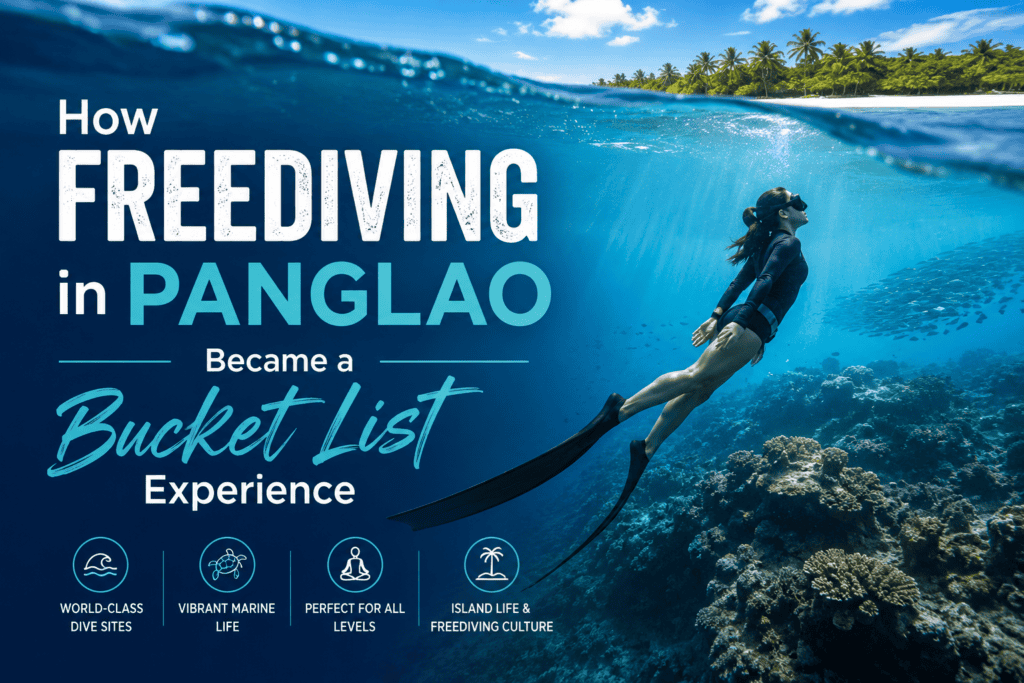
There are many beautiful diving destinations around the world, but Panglao offers a unique combination of accessibility, marine life, and community.
Beginner freediving courses are designed for anyone who enjoys the ocean and wants to experience it beyond the surface.
Some students discover freediving while traveling and decide to give it a try during their vacation. Others come from snorkeling, scuba diving, surfing, or swimming and are looking for a new challenge. It’s also common to meet people who have simply been fascinated by freediving for years and finally decide it’s time to learn.
Not everyone takes a freediving course for the same reason.
Some people want to get closer to marine life and coral reefs. Others are interested in improving their breath-hold ability, becoming more comfortable in the ocean, or learning a completely new skill.
Many students arrive focused on depth, but often leave with a greater appreciation for the mental side of freediving. Learning how to relax under pressure and remain calm in unfamiliar situations can be just as rewarding as reaching a personal depth milestone.
One of the biggest misconceptions about freediving is that it requires extensive experience before you can begin. In reality, most beginner courses assume that students are completely new to the sport.
Instructors are accustomed to teaching first-time divers and will guide you through each stage of the learning process. The course is designed to build confidence gradually rather than expecting students to perform advanced skills immediately.
You don’t need to be an expert swimmer to learn freediving. However, you should feel comfortable in the water and have basic swimming skills.
Being able to float, tread water, and swim moderate distances comfortably will make the learning process easier. If you’re already comfortable spending time in the ocean, you’re likely well-prepared for a beginner course.
One thing that surprises many beginners is that freediving isn’t about pushing your body to its limits.
While a reasonable level of fitness is beneficial, freediving relies heavily on relaxation and efficiency. Students who arrive expecting an intense physical workout are often surprised to discover that proper breathing, body awareness, and calmness play a much bigger role than strength alone.
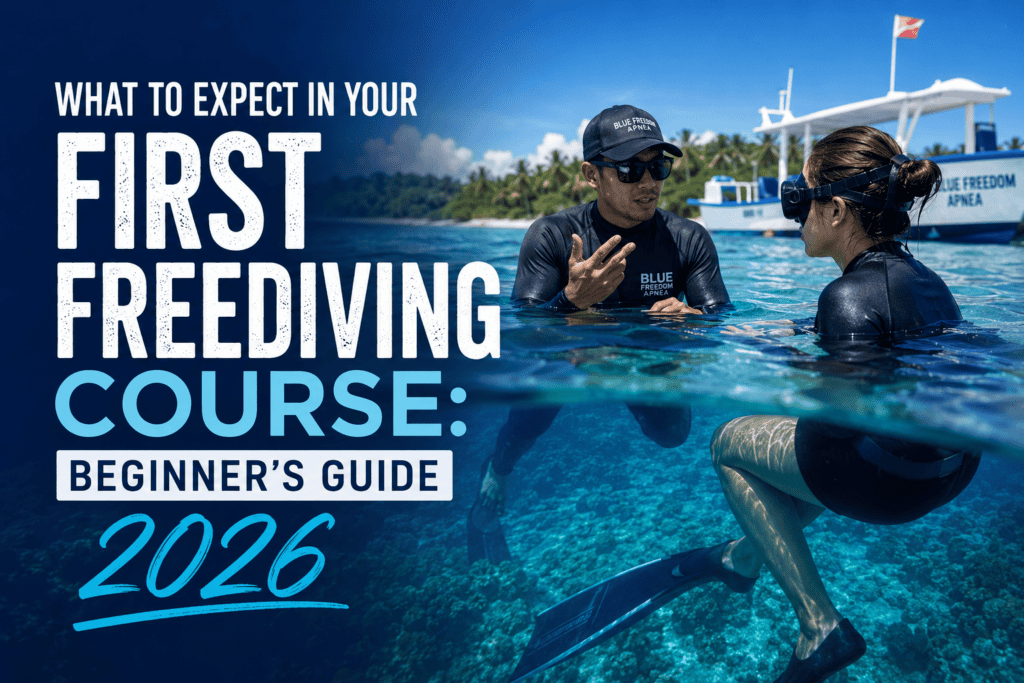
Most beginner freediving courses combine classroom learning, confined water practice, and open water training. Each part of the course serves a specific purpose and helps prepare students for the next stage of learning.
By the end of the course, you’ll have a much better understanding of how freediving works and how to dive safely and confidently.
Training usually begins with a classroom session that covers the fundamentals of freediving.
You’ll learn about breath-holding, pressure changes underwater, equalization, and safety procedures. Understanding the theory behind freediving helps students make informed decisions in the water and develop good habits from the beginning.
Breathing is one of the most important aspects of freediving.
You’ll learn techniques that help prepare your body for a dive while promoting relaxation at the surface. These exercises are not designed to force longer breath-holds. Instead, they help reduce unnecessary tension and improve overall comfort in the water.
Many students continue using these breathing techniques long after the course because they can be helpful in everyday life as well.
Open water sessions are often the highlight of the course.
Under instructor supervision, you’ll apply the skills you’ve learned in a real diving environment. Rather than focusing solely on depth, the goal is to become comfortable, relaxed, and efficient underwater.
Many beginners are surprised by what they can accomplish after just a few days of training.
Before heading into open water, students usually practice key skills in a pool or confined water environment.
This controlled setting allows you to focus on breath-holding, body position, finning technique, and safety procedures without worrying about depth. It’s often where students gain their first real sense of confidence as freedivers.
A beginner freediving course focuses on practical skills that will support your future development as a diver.
These skills form the foundation for safe and enjoyable freediving.
It’s completely normal to feel nervous before your first freediving course.
Almost every student arrives with questions or concerns, whether it’s about holding their breath, diving deeper, or simply feeling comfortable underwater.
Many beginners worry about how it will feel to dive underwater without breathing equipment.
These concerns usually fade as training progresses. Skills are introduced gradually, allowing students to gain confidence step by step rather than feeling pressured to perform beyond their comfort level.
Equalization is one of the most common challenges beginners encounter.
Fortunately, it is also one of the areas where professional instruction can make a significant difference. Small adjustments in technique often lead to major improvements.
Staying relaxed is often harder than learning the physical skills.
Beginners sometimes focus so much on performance that they forget to slow down and enjoy the experience. As confidence grows, relaxation becomes more natural and diving often feels significantly easier.
Most freediving schools provide the essential equipment needed during training.
This often includes a mask, snorkel, fins, weight belt, and other safety equipment. Some schools also provide wetsuits depending on the location and water temperature.
Before booking, it’s always worth checking what equipment is included and whether you’ll need to bring anything yourself.
Preparing for your course doesn’t require anything complicated. A few simple steps can help ensure you arrive feeling comfortable and ready to learn.
Most students only need swimwear, a towel, sunscreen, drinking water, and personal items for the day.
If you already own freediving equipment, check with your instructor beforehand to see whether it’s suitable for training.
Try to get a good night’s sleep before your course and stay hydrated throughout the day.
It’s also best to avoid alcohol and heavy meals immediately before training. Arriving rested and comfortable will help you get the most from your experience.
The location where you learn can have a significant impact on your overall experience.
Panglao has become one of the most popular freediving destinations in the Philippines because it offers conditions that are particularly well-suited for beginners.
Warm water and excellent visibility create a welcoming environment for first-time divers.
Being able to clearly see your surroundings often helps reduce anxiety and allows students to focus on learning rather than adjusting to difficult conditions.
Many of Panglao’s training locations offer calm and predictable conditions throughout much of the year.
This consistency allows instructors to focus on teaching while students focus on developing skills and confidence in the water.
At Blue Freedom Apnea, we believe that learning freediving should be both safe and enjoyable.
Our courses are designed to help students build confidence at their own pace while developing the skills needed to become capable and responsible freedivers. Whether you’re taking your first course or continuing your training journey, our experienced instructors provide the guidance and support needed to help you progress.
Combined with Panglao’s exceptional diving conditions, Blue Freedom Apnea offers an ideal environment to discover what freediving is all about.
Every experienced freediver started as a beginner. The first step isn’t about reaching a specific depth or achieving a certain breath-hold time. It’s about learning the fundamentals, building confidence, and discovering a new way to experience the ocean.
If you’ve been thinking about trying freediving, there’s no better time to start. Blue Freedom Apnea offers beginner-friendly freediving courses in Panglao designed to help you learn safely while enjoying some of the best diving conditions in the Philippines.
Contact Blue Freedom Apnea today to learn more about our beginner freediving courses and begin your journey into the underwater world.
Most beginners find freediving easier than they expected. While the idea of holding your breath underwater can seem intimidating at first, proper instruction and gradual progression help students build confidence quickly. The course is designed to introduce skills step by step, making the learning process manageable and enjoyable.
There is no fixed depth that every student must reach. Progress depends on your comfort level, equalization ability, and overall confidence in the water. The focus of a beginner course is learning proper technique and safety rather than chasing depth.
You don’t need to be an advanced swimmer, but you should feel comfortable in the water and have basic swimming skills. Being able to swim, float, and remain calm in open water will help you get the most from your training.
Yes, when taught by qualified instructors and practiced according to established safety procedures. A beginner course teaches essential safety skills from the very beginning, helping students develop good habits and confidence in the water.
Most students only need swimwear, a towel, sunscreen, drinking water, and personal items for the day. Many freediving schools provide the essential training equipment, but it’s always a good idea to confirm what is included before your course begins.

Blue Freedom Apnea is an AIDA certified freediving club and non-profit based in Panglao Island, Philippines that provides high quality freediving courses and training to both clients and interns.