Freediving vs Scuba Diving: Which Is Better for You?

Freediving vs Scuba Diving - Which Is Better for You? - Blue Freedom Apnea

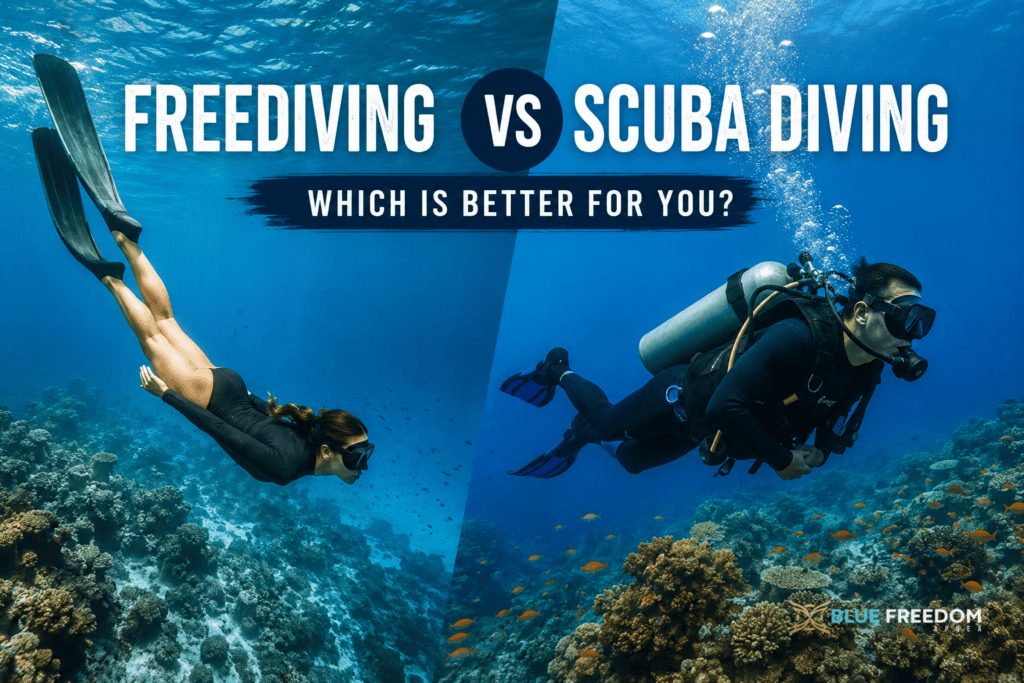
The ocean offers countless ways to explore its beauty, but two of the most popular underwater activities are freediving and scuba diving. While both allow you to experience marine life up close, they offer completely different experiences. If you’re wondering which option is right for you, understanding the differences can help you make the best choice based on your goals, budget, and lifestyle.

What Is Freediving and How Does It Work?

Freediving is the practice of diving underwater using a single breath without relying on breathing equipment. Divers hold their breath while exploring reefs, descending to depth, or training for improved performance.

Basic Principles of Freediving

The foundation of freediving revolves around breath control, relaxation, and efficient movement in the water. Rather than fighting against the body’s natural responses, freedivers learn techniques that conserve oxygen and maximize breath-hold time.

Proper training teaches divers how to equalize pressure, improve lung efficiency, and stay calm underwater.

What Makes Freediving Different

Unlike scuba diving, freediving provides a quieter and more natural underwater experience. There are no tanks or regulators, allowing divers to move freely and connect more closely with the ocean environment.

Many people are drawn to freediving because of its simplicity, mindfulness, and minimal equipment requirements.

What Is Scuba Diving and How Does It Work?

Scuba diving uses specialized equipment that supplies compressed air, allowing divers to breathe underwater for extended periods.

How Scuba Equipment Works

Scuba systems include an air tank, regulator, buoyancy control device (BCD), gauges, and other safety equipment. The regulator reduces the high-pressure air from the tank into breathable air while underwater.

This setup allows divers to remain submerged much longer than freedivers.

What to Expect During a Scuba Dive

A typical scuba dive involves descending slowly, monitoring air consumption, maintaining buoyancy, and following a planned dive profile. Divers can spend significant time exploring reefs, shipwrecks, and marine ecosystems without returning to the surface for air.

Freediving vs Scuba Diving: Key Differences

While both activities take place underwater, the experience differs in several important ways.

Equipment and Gear Requirements

Freediving equipment is relatively simple and usually includes:

  • Mask
  • Snorkel
  • Long fins
  • Wetsuit (optional)
  • Weight belt

Scuba diving requires significantly more gear, including tanks, regulators, BCDs, gauges, and safety equipment.

Depth, Bottom Time, and Dive Style

Freedivers can reach impressive depths but are limited by their breath-hold capacity. Most recreational freedivers spend short periods underwater before resurfacing.

Scuba divers can stay underwater much longer, making it easier to explore deeper reefs and underwater attractions for extended periods.

Cost and Accessibility

Freediving is generally more affordable because it requires less equipment and lower ongoing expenses.

Scuba diving often involves equipment rental, tank refills, boat fees, and certification costs, making it a more expensive hobby over time.

Training and Certification Process

Both activities benefit from professional instruction.

Freediving courses focus on breath-holding techniques, safety procedures, equalization, and rescue skills.

Scuba certification programs emphasize equipment use, underwater navigation, dive planning, and emergency procedures.

Pros and Cons of Freediving

Benefits of Freediving

Freediving offers several unique advantages:

  • Minimal equipment requirements
  • Lower overall costs
  • Improved breath control and relaxation
  • Stronger connection with the ocean
  • Easier travel and portability

Many divers also appreciate the physical and mental benefits associated with breathing techniques and mindfulness training.

Limitations and Challenges

Freediving requires disciplined training and safety awareness. Breath-hold limitations restrict underwater time, and divers must learn proper techniques to avoid potential risks.

Consistent practice is often necessary to improve performance and confidence.

Pros and Cons of Scuba Diving

Benefits of Scuba Diving

Scuba diving provides several advantages:

  • Extended underwater exploration
  • Greater bottom time
  • Access to deeper dive sites
  • Comfortable observation of marine life
  • Ideal for underwater photography

Many divers enjoy the ability to explore reefs and wrecks without the pressure of holding their breath.

Limitations and Trade-offs

Scuba diving comes with higher costs, more equipment maintenance, and additional travel logistics. Divers must also manage air consumption and adhere to specific safety guidelines regarding ascent rates and decompression.

Which Is Better for Beginners, Travel, and Lifestyle?

Ease of Learning and Entry


Both activities are beginner-friendly when taught by qualified instructors. However, many people find freediving easier to start because it requires less equipment and fewer technical skills.

Flexibility and Travel Convenience


Freediving is often the preferred choice for travelers. A mask, snorkel, and fins can easily fit into luggage, making it convenient for island hopping and beach vacations.

Scuba diving may require equipment rentals or transporting bulkier gear.

Overall Experience and Ocean Connection


Many freedivers describe the experience as peaceful and meditative. Without the noise of bubbles and equipment, they feel more connected to marine life and their surroundings.

Scuba diving, on the other hand, allows for longer underwater exploration and detailed observation of marine ecosystems.

Can You Do Both Freediving and Scuba Diving?

Absolutely. Many ocean enthusiasts enjoy both activities because they complement each other. Freediving can improve water confidence, breath awareness, and equalization skills, while scuba diving allows for longer underwater adventures.

Learning both provides greater flexibility depending on travel plans and diving goals.

Why Many Divers Start with Freediving in Panglao

Panglao has become one of the most popular destinations in the Philippines for learning freediving.

Beginner-Friendly Conditions

The area offers warm water, excellent visibility, and generally calm conditions throughout much of the year. These factors create an ideal learning environment for first-time divers.

Ideal Environment for Learning and Progression

Panglao’s accessible dive sites and thriving freediving community make it an excellent location for training, certification, and skill development. Divers can progress from beginner courses to advanced depth training in a supportive environment.

Also Read: Freediving in Panglao: A World of Underwater Wonders

How to Get Started with Freediving


Starting your freediving journey is easier than many people think.

Here are a few steps to begin:

  1. Learn basic water safety skills.
  2. Enroll in a certified freediving course.
  3. Practice proper breathing and relaxation techniques.
  4. Invest in quality beginner gear.
  5. Always dive with a trained buddy.

Professional instruction is strongly recommended to develop safe habits and build confidence from the beginning.

Why Choose Blue Freedom Apnea?

Blue Freedom Apnea provides professional freediving education designed for both beginners and experienced divers. With experienced instructors, structured training programs, and access to ideal diving conditions in Panglao, students can learn safely while developing essential freediving skills.

Whether your goal is ocean exploration, personal growth, underwater photography, or competitive training, Blue Freedom Apnea offers a supportive environment to help you succeed.

Also Read: Best Freediving Spots in the Philippines: A Local Guide

Ready to Start Your Freediving Journey?

If you’re deciding between freediving and scuba diving, the best way to find out which suits you is to experience it for yourself. Many divers begin with freediving because it requires less equipment, offers greater flexibility for travel, and provides a unique connection with the ocean.

At Blue Freedom Apnea, we offer beginner-friendly freediving courses in Panglao designed to help you learn safely and build confidence in the water. Whether you’re completely new to diving or looking to expand your underwater skills, our experienced instructors will guide you every step of the way.

Contact Blue Freedom Apnea today to learn more about our freediving courses and take your first step into the underwater world.

Frequently Asked Questions (FAQ):

Is freediving safer than scuba diving?

Both freediving and scuba diving can be safe when practiced correctly and with proper training. The risks are different for each activity. Freediving focuses on breath-hold safety, while scuba diving involves equipment management and dive planning. The safest approach is to learn from qualified instructors and always follow established safety procedures.

Which is more expensive, freediving or scuba diving?

Freediving is generally more affordable than scuba diving. The equipment required for freediving is simpler and there are fewer ongoing costs. Scuba diving often involves equipment rentals, tank refills, boat fees, and additional maintenance expenses, which can make it more costly over time.

Do I need to be a strong swimmer to freedive?

You do not need to be a competitive swimmer to start freediving. However, you should be comfortable in the water and have basic swimming skills. Most beginner freediving courses are designed to help students build confidence while learning the fundamental techniques needed to dive safely.

Can I switch from scuba diving to freediving easily?

Yes. Many scuba divers transition to freediving because they already have experience in the ocean and are familiar with concepts such as equalization and underwater awareness. While freediving requires a different set of skills, scuba divers often adapt quickly with proper instruction.

How long does it take to learn freediving?

Most people can learn the fundamentals of freediving in a beginner course that lasts one to two days. Developing confidence, improving breath-hold ability, and reaching greater depths takes time and practice. Like any skill, progress varies from person to person, but beginners are often surprised by how much they can achieve during their first course.

Recent Blog Posts

Blue Freedom Apnea Logo Vertical

ABOUT

Blue Freedom Apnea is an AIDA certified freediving club and non-profit based in Panglao Island, Philippines that provides high quality freediving courses and training to both clients and interns.

GET IN TOUCH